


Financial institutions operate under some of the most demanding regulatory environments of any sector. When a core data platform fails, or when an auditor asks exactly which third-party components process customer data and under what conditions, the answer needs to be documented, traceable, and ready. Frameworks like the Digital Operational Resilience Act (DORA) and the NIS-2 Directive have made this expectation explicit: institutions must demonstrate control over their critical technology dependencies, not just assume it. This article walks through what that documentation looks like in practice, which artifacts regulators expect, and how platform choices affect the tractability of the whole exercise. We look at how open-source platforms fit into this picture specifically at the end.
Regulatory pressure driving dependency documentation
DORA, which became applicable across EU financial entities in January 2025, requires firms to maintain detailed registers of all ICT third-party service providers and to assess concentration risk across their technology supply chains. The NIS-2 Directive extends similar obligations to operators of essential services, including many financial infrastructure providers. Together, these frameworks have shifted dependency documentation from a best-practice recommendation to a compliance obligation with real enforcement teeth.
The practical implication is that “we use a managed cloud service” is no longer a sufficient answer. Regulators want to know which components underpin that service, who maintains them, what the contractual exit conditions are, and how the institution would respond if a critical dependency became unavailable or compromised. Institutions that cannot answer these questions face supervisory scrutiny, and in some cases, mandatory remediation timelines.
What counts as a critical data-platform dependency
Not every library or configuration file qualifies as a critical dependency, but the scope is broader than many teams initially assume. For a financial institution’s data platform, critical dependencies typically include the compute and orchestration layer (such as Kubernetes distributions and their upstream components), the data processing engines handling regulated data, messaging and streaming infrastructure, storage backends, and any identity or access management integrations.
Third-party operators, managed services, and even open-source projects with concentrated maintainer communities can all qualify as critical if their failure or compromise would materially affect data availability, integrity, or confidentiality. The key test regulators apply is substitutability: how quickly and completely could the institution replace this component if it became unavailable? If the answer is “not quickly” or “not without significant rework,” the dependency is almost certainly critical and needs to be documented accordingly.
Core documentation artifacts regulators expect
Across DORA, NIS-2, and related national implementations, a consistent set of documentation artifacts has emerged as the baseline expectation for financial institutions managing data-platform dependencies.
The ICT third-party register
This is the foundational artifact: a structured inventory of every third-party provider involved in delivering ICT services, including data platform components. For each entry, regulators expect the provider’s identity, the nature of the service, the data categories processed, contractual terms including exit clauses, and an assessment of substitutability. DORA’s regulatory technical standards specify the minimum fields in detail.
Software Bill of Materials (SBOM)
An SBOM documents the exact components, versions, and licences present in a software system. For data platforms, this means capturing not just the top-level applications but their transitive dependencies. SBOMs in standard formats such as CycloneDX or SPDX allow institutions to cross-reference components against known vulnerability databases and to demonstrate to auditors that they have visibility into their full software supply chain. A fully traceable software supply chain starts here.
Concentration risk assessments
Regulators are particularly concerned about situations where multiple critical functions depend on a single provider or a single geographic region. Institutions need documented assessments showing they have identified these concentrations and have either mitigated them or accepted the risk through a formal governance process.
Exit and substitution plans
For each critical dependency, there should be a documented plan describing how the institution would transition away from that provider or component if necessary. These plans need to be realistic and periodically tested, not theoretical documents that sit in a drawer.
How open-source platforms simplify dependency traceability
One of the less-discussed advantages of open-source data platforms is that they make dependency traceability structurally easier. When source code is publicly available and build processes are reproducible, generating accurate SBOMs becomes a tractable engineering task rather than a negotiation with a vendor about what they are willing to disclose.
With proprietary platforms, institutions often face a fundamental information asymmetry: the vendor knows exactly what is inside their product, but the customer does not, and contractual disclosure obligations vary widely. Open-source components, by contrast, allow institutions to inspect, audit, and document their dependencies independently. Build pipelines can be configured to produce SBOMs automatically as part of the release process, and vulnerability scanning can run continuously against the known component list. This is particularly relevant for data lakehouse architectures built on components like Apache Spark™ and Trino, where the full dependency graph is inspectable and auditable.
Avoiding lock-in as a dependency-control strategy
Vendor dependency management in financial services is not only a compliance question; it is a strategic one. When a platform is tightly coupled to a single vendor’s proprietary APIs, data formats, or operational tooling, the institution’s ability to substitute that dependency, which regulators require to be assessed, is structurally limited. The exit plan becomes theoretical rather than practical.
Data sovereignty in financial services means more than keeping data within a jurisdiction. It means retaining the operational ability to move, replace, or modify the systems that process that data without requiring the vendor’s cooperation. Institutions that have built on open standards and cloud-agnostic infrastructure consistently find that their concentration risk assessments are simpler to write and their exit plans are more credible, because the technical path to substitution actually exists. This is one reason why many European financial institutions are actively evaluating open-source, Kubernetes-native platforms as part of their DORA compliance programmes.
Integrating dependency documentation into existing governance workflows
The documentation artifacts described above are most useful when they are living records rather than point-in-time snapshots. Integrating dependency documentation into existing governance workflows means connecting it to change management, vendor management, and risk assessment processes so that the register stays current as the platform evolves.
Practically, this means automating SBOM generation as part of the CI/CD pipeline, triggering vendor register updates whenever a new third-party component is introduced, and scheduling periodic reviews of concentration risk assessments tied to the institution’s existing risk calendar. Infrastructure-as-code approaches help here: when platform configuration is version-controlled and declarative, the dependency graph at any point in time is recoverable from the repository history, which is exactly the kind of audit trail regulators want to see.
Governance teams should also ensure that dependency documentation is not siloed within the data engineering function. Risk, compliance, and procurement teams all have legitimate interests in this information, and the ICT third-party register in particular needs to be accessible to the people who manage vendor relationships and contractual obligations. A shared, structured format, rather than a spreadsheet maintained by one team, makes cross-functional use realistic.
How Stackable supports data-platform dependency control
The Stackable Data Platform (SDP) is built specifically to address the dependency transparency and sovereignty requirements that financial institutions face under DORA and the NIS-2 Directive. Because the SDP is 100% open source and Kubernetes-native, every component in the stack is inspectable, and the full dependency graph is available for SBOM generation without vendor negotiation.
- Fully traceable software supply chain: All SDP components are open source, with publicly available source code and reproducible builds, making SBOM generation a straightforward engineering task rather than a contractual one.
- No proprietary lock-in: The SDP runs on any Kubernetes environment, on-premises or in any cloud, which means exit plans and substitution assessments are grounded in technical reality rather than vendor goodwill.
- Infrastructure-as-code by design: Platform configuration is declarative and version-controlled, providing the audit trail that regulators expect and making dependency documentation a natural output of normal operations.
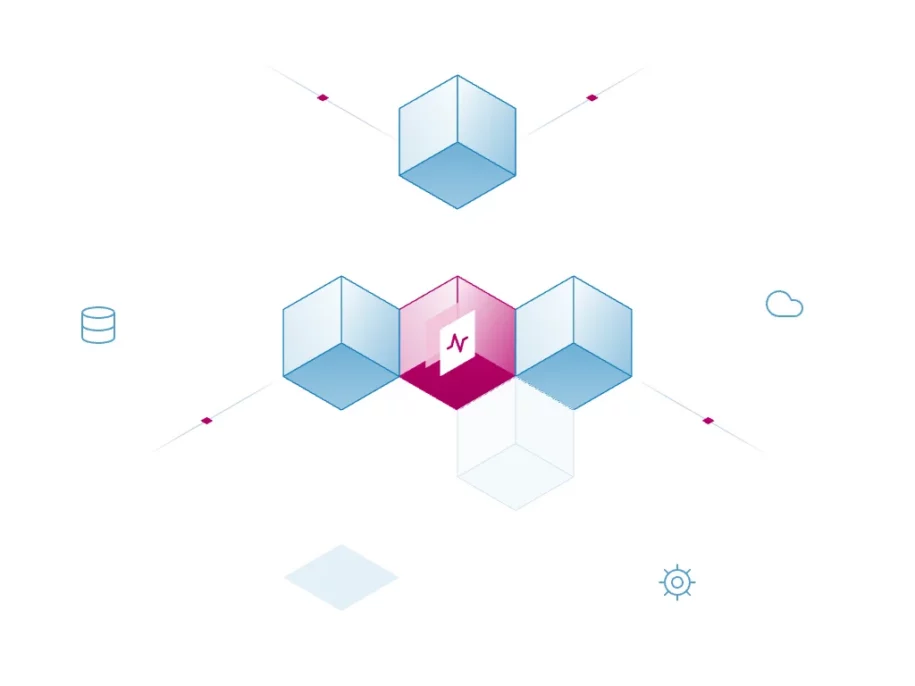
- Modular architecture: Components such as the Stackable Operator for Apache Kafka® can be added or removed independently, which simplifies concentration risk assessments and makes substitution plans credible.
- Data sovereignty by default: The SDP runs in your own infrastructure, keeping data under your control and within your chosen jurisdiction, which directly supports the data sovereignty requirements central to financial services compliance.
If your team is working through DORA compliance requirements or building out your ICT third-party register, we are happy to discuss how the SDP fits into that process. Get in touch with the Stackable team to talk through your specific setup.
Related Articles
- How do you design a sovereign data platform for multiple departments or organisations?
- What is a Software Bill of Materials (SBOM) and why does your data platform need one?
- How do open table formats keep your data lakehouse portable across engines?
- How do you design a data mesh for a multi-cloud environment?
- How do you keep data quality intact during a platform migration?