



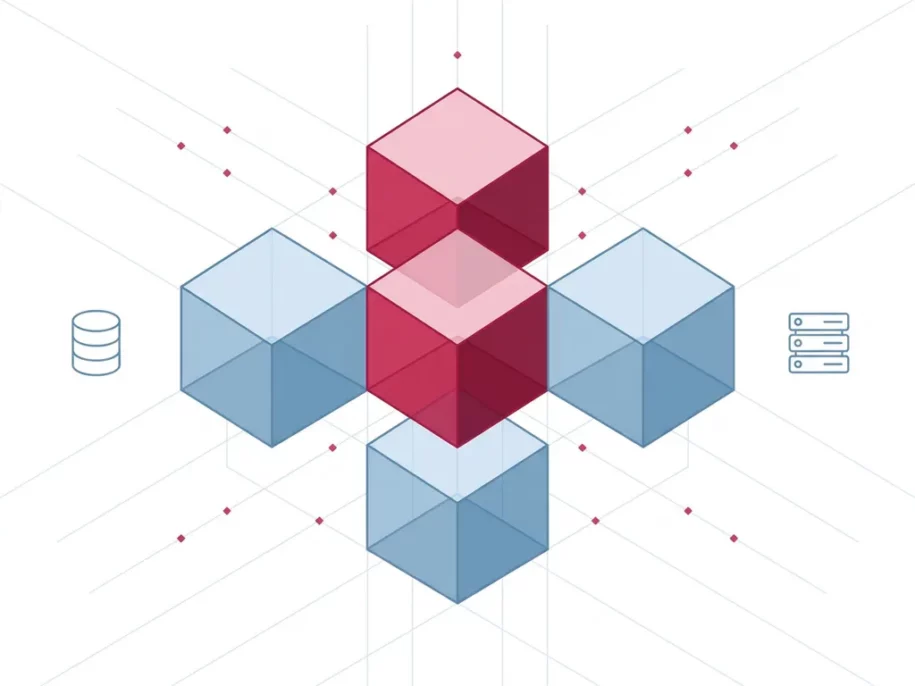
Running old and new data platforms in parallel means operating both systems simultaneously – the legacy platform continues to serve production workloads while the new platform is built out, validated, and gradually takes over. The migration happens in controlled increments rather than as a single cutover event. This approach trades operational complexity for reduced risk, and it is the standard approach for any data platform modernization where downtime or data loss is not acceptable. The sections below cover the practical questions that come up once you commit to this strategy.
Many of the teams we work with are migrating away from legacy Big Data distributions onto Kubernetes-native infrastructure, and the parallel operation phase is consistently where the hardest problems surface. Here is where the Stackable Data Platform (SDP) fits into that picture.
What does running two data platforms in parallel actually involve?
Running two data platforms in parallel means maintaining two fully operational environments – the legacy system and the new target platform – with live data flowing through both simultaneously. The goal is to validate the new platform against real workloads before decommissioning the old one. This is not a backup strategy; both platforms are active, and both must be maintained.
In practice, this involves several layers of work running concurrently:
- Dual ingestion: data pipelines write to both platforms, or a replication layer forwards data from the source system to both targets.
- Query validation: the same queries run against both platforms, and results are compared to catch behavioral differences before the new platform goes live.
- Operational overhead: two sets of infrastructure to monitor, patch, and operate. This is the cost of the approach, and it is real.
- Incremental traffic shifting: workloads migrate in stages – read traffic first, then write traffic, then batch jobs, then streaming pipelines.
The duration of the parallel phase varies. Simple migrations may run in parallel for a few weeks; complex, multi-system migrations in regulated industries can run for months. The key discipline is having a defined end state and a decommission plan from the start, not treating the parallel phase as indefinite.
What are the biggest risks of a parallel data platform migration?
The biggest risks in a parallel data platform migration are data divergence between the two systems, extended operational cost from running dual infrastructure, and the organizational tendency to never fully cut over. Each of these can turn a controlled migration into a permanent, expensive mess.
Data divergence
When two platforms ingest or process the same data independently, they will eventually produce different results. Schema evolution, processing logic differences, timezone handling, and subtle behavioral differences in query engines all contribute. If you do not have automated result comparison in place from the beginning, you will discover these differences late, when they are harder to trace.
Indefinite parallel operation
The parallel phase has a gravitational pull toward permanence. Teams get comfortable with the old system still running, pressure to decommission eases, and suddenly you are maintaining two platforms indefinitely. This is not a technical problem; it is an organizational one. Set a hard decommission date early and treat it as a real deadline.
Operational fatigue
Two platforms means two monitoring setups, two upgrade cycles, and two sets of on-call responsibilities. Teams underestimate this cost. If the migration drags on, the operational burden becomes a reason to slow the migration further, which extends the burden. Plan the parallel phase duration conservatively and staff it accordingly.
How do you keep data in sync across two platforms during migration?
Keeping data in sync across two platforms during migration requires a deliberate synchronization strategy chosen before migration begins. The three main approaches are dual-write at the application layer, change data capture (CDC) from the source system, and log-based replication from the legacy platform itself.
Dual-write is the simplest conceptually: the application or pipeline writes to both platforms simultaneously. It works well for streaming workloads using Apache Kafka®, where a consumer group can fan out to multiple targets. The risk is that write failures to one platform can create silent divergence if not handled carefully.
CDC-based replication captures changes at the database or storage layer and replays them on the new platform. Tools like Debezium are commonly used here. This approach decouples the application from the migration and is less invasive, but it introduces replication lag and requires careful handling of schema changes.
Batch reconciliation runs periodic comparison jobs that identify and correct divergence between platforms. This is a safety net rather than a primary sync mechanism, but it is worth running regardless of which primary approach you choose.
Whichever method you use, define a canonical source of truth from the start. During the parallel phase, one platform owns the authoritative state. The other is a validated copy. This distinction matters when you need to resolve conflicts.
When should you cut over from the old platform to the new one?
Cut over from the old platform to the new one when the new platform has processed a representative sample of production workloads, query results match the legacy system within acceptable tolerances, and operational runbooks for the new platform are tested and in place. Cutting over before all three conditions are met increases the probability of a rollback.
A practical cutover sequence looks like this:
- Read traffic first: route analytical and reporting queries to the new platform while writes still go to the old one. This is low-risk and gives real-world validation of query behavior.
- Write traffic next: once reads are stable, shift write workloads. At this point, the new platform becomes the system of record.
- Legacy becomes read-only: keep the old platform available for a defined period as a fallback, but stop writing to it. This is your rollback window.
- Decommission: after the rollback window closes without incident, shut down the legacy platform.
Do not let the rollback window become open-ended. Define it in days, not „until we’re confident.“ Confidence without a deadline is not a plan.
What tools and infrastructure support parallel platform operation?
The tools that support parallel platform operation span orchestration, replication, observability, and traffic routing. Kubernetes is the natural foundation for running both platforms in isolated namespaces on shared infrastructure, which reduces the cost of maintaining two environments simultaneously.
For data replication and synchronization, Apache Kafka® is widely used as the backbone for dual-write architectures. Kafka’s consumer group model allows multiple downstream systems to consume the same stream independently, making it straightforward to feed both the legacy and new platform from a single source of truth.
For batch workloads, Apache Spark™ can run transformation and validation jobs against both platforms to produce comparison reports. This is particularly useful for validating aggregate results and catching behavioral differences in query engines like Trino.
On the observability side, unified monitoring across both platforms is non-negotiable. If your legacy platform and new platform have separate, siloed monitoring, you will miss cross-system issues. Prometheus and Grafana work well here, especially when both platforms expose metrics in a consistent format.
Infrastructure-as-code tooling – Helm, Terraform, or Kubernetes operators – makes it practical to provision and manage both environments reproducibly. This also simplifies the decommission step: tearing down infrastructure defined as code is far cleaner than manually dismantling a hand-configured legacy system.
How do you avoid vendor lock-in when migrating to a new data platform?
Avoiding vendor lock-in when migrating to a new data platform requires choosing open standards and open-source components at every layer of the stack, so that no single vendor controls your ability to move, scale, or change your infrastructure. The migration itself is an opportunity to reduce dependency on any single vendor, not simply transfer it to a new one.
Concretely, this means:
- Open storage formats: Apache Iceberg and Apache Parquet are widely supported across query engines. Proprietary table formats can limit your choice of compatible tooling.
- Open query interfaces: SQL-compatible engines like Trino allow you to query data across sources without rewriting logic for a proprietary API.
- Cloud-agnostic deployment: if your new platform runs on Kubernetes, it runs on any cloud provider or on-premises. You are not locked to a specific managed service.
- Open-source operators and tooling: operators that manage lifecycle, configuration, and upgrades should themselves be open source and auditable.
Data sovereignty is a related but distinct concern. Open-source software gives you the right to inspect and modify the code, but data sovereignty means your data stays under your control – in your infrastructure, in your jurisdiction. These two properties reinforce each other but are not the same thing.
One practical test: if your primary vendor disappeared tomorrow, how long would it take to migrate to an alternative? If the answer involves significant re-engineering, you have lock-in worth addressing.
How Stackable helps with data platform migration
The SDP is designed for exactly this scenario: organizations migrating away from legacy Big Data distributions onto open, Kubernetes-native infrastructure, often while keeping the legacy system running in parallel.
Specific capabilities that are relevant to parallel migration:
- Kubernetes-native deployment: the SDP runs in Kubernetes namespaces, which makes it straightforward to operate alongside a legacy platform on shared or separate infrastructure without interference.
- Modular stack composition: you can bring up individual components – Apache Kafka®, Apache Druid™, Trino, Apache Spark™ – incrementally, matching the pace of your migration rather than replacing everything at once.
- Infrastructure-as-code provisioning: all SDP components are configured declaratively via Kubernetes custom resources. This makes the new environment reproducible, auditable, and easier to validate against the legacy system.
- Cloud-agnostic and on-premises support: the SDP runs on any Kubernetes cluster – on-premises, in any cloud, or hybrid. This is relevant if your legacy platform is on-premises and your migration target involves cloud or edge infrastructure.
- 100% open source: no proprietary lock-in is introduced by the migration itself. The source code is publicly available, and the platform uses open standards throughout.
If you are planning a parallel migration and want to understand how the SDP fits your specific architecture, talk to our team directly. We can work through the specifics without the sales pitch.
Ähnliche Artikel
- What is an open table format and why does it matter for data lakehouses?
- What is event-driven architecture and how does it fit a modern data platform?
- How does Apache Spark fit into a modern data lakehouse?
- What are the long-term maintenance trade-offs after a data platform migration?
- What is the role of a data platform architect during a migration?